Rowing Machine Buying Guide UK: Everything You Need to Know Before You Buy
Buying a rowing machine is a significant investment, and the choice you make can determine whether it becomes a daily fixture in your home or an expensive coat rack. Unlike many fitness equipment impulse buys, a quality rowing machine will last 10+ years with minimal maintenance. This guide covers the technical factors that genuinely matter when comparing models on the UK market.
Resistance Type
How the machine creates resistance is your first decision, and it fundamentally affects the feel, noise level, and maintenance requirement.
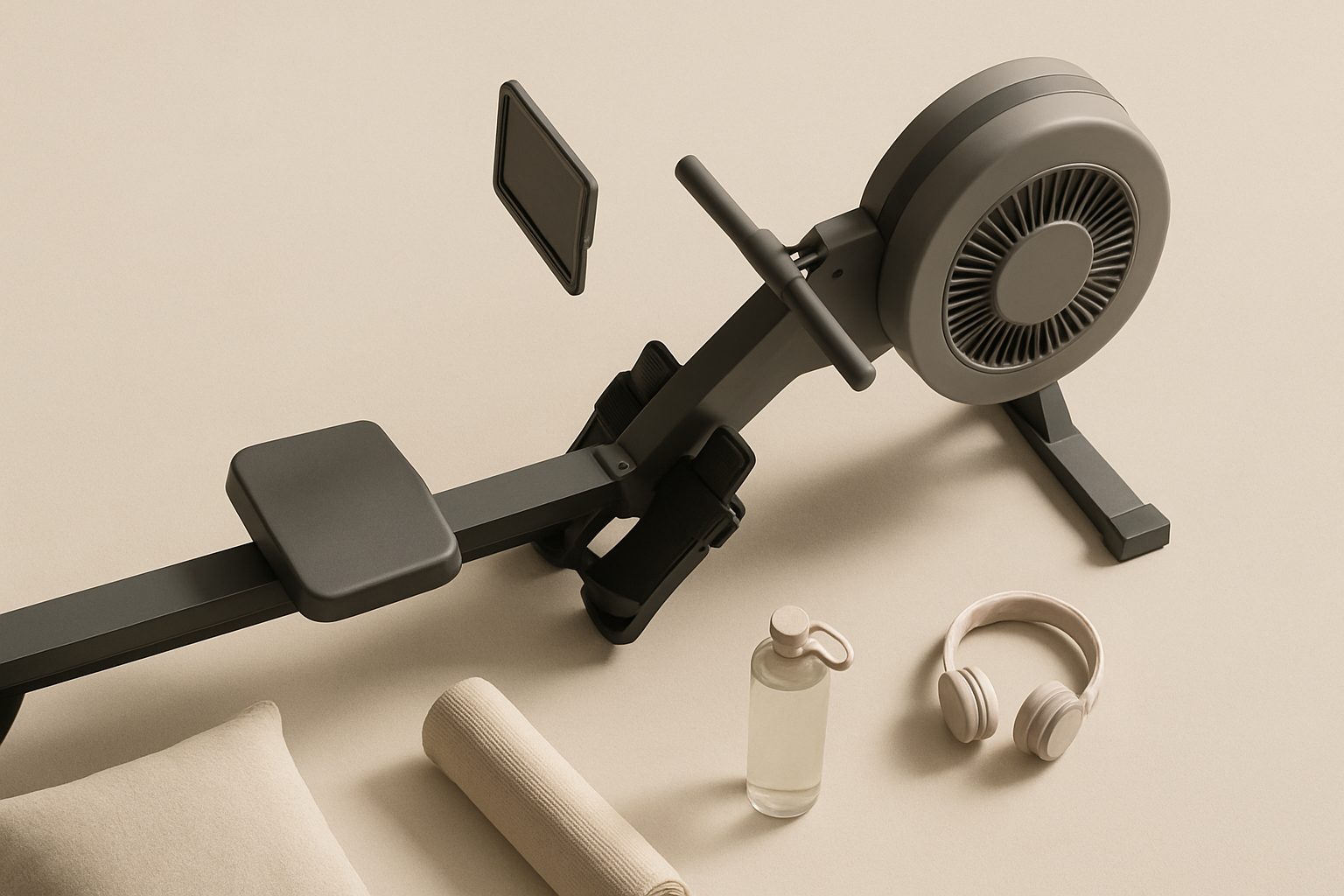
Air resistance uses a flywheel that pushes air through vanes. Concept2 dominates this category globally and for good reason—the resistance naturally increases as you row harder, so you can't build momentum and cheat. This mirrors actual rowing. Air machines are loud, though, and they require more space since the flywheel is large. They're durable and need almost no maintenance. If you're serious about rowing technique or plan to row frequently, air resistance is worth the noise.
Magnetic resistance creates drag using magnets positioned near a spinning wheel. It's nearly silent, which matters if you share space or have early mornings. Resistance is adjustable at fixed levels—you choose level 5 or level 6, but you don't get the natural progression air provides. Magnetic machines are compact and affordable. The trade-off is that sloppy technique is harder to feel; you can generate momentum and reduce the actual work. They're reliable and maintenance-free.
Water resistance uses a tank of water and a paddle. It's the quietest option and feels closest to actual rowing—the resistance builds smoothly as you accelerate and decreases as you slow. Beautiful to watch, aesthetically nice, but bulky and expensive. Water machines have more moving parts than air or magnetic; leaks are rare but possible. They're genuinely excellent for regular rowers but not the best choice if this is your first machine.
Hydraulic resistance is the cheapest and most compact option. Two cylinders with fluid provide resistance. These machines are space-saving and affordable, but they're not worth considering if you can stretch your budget. The resistance is asymmetrical (pulling and pushing feel different), they're slow to recover between strokes, and they wear out faster. They work as a first machine if budget is the only constraint, but every other type is a better long-term choice.
Flywheel Weight
The flywheel—the spinning wheel that creates inertia—matters more than marketing suggests. Heavier flywheels (9–10 kg) smooth out the rowing stroke because they resist acceleration and deceleration. Lighter ones (6–8 kg) feel jerky and require more effort to stabilize. This isn't just feel; it affects your technique. If you want to develop good form, a heavier flywheel is worth the cost. Most machines worth buying have flywheels of at least 8 kg.
Seat and Footrests
You'll spend 30+ minutes at a time on this seat, so its quality directly affects whether you use the machine regularly.
The seat slides on a rail or track, and cheap seats on poor tracks are genuinely uncomfortable—they wobble, rattle, or stick. Feel the seat glide when you test a machine. It should move smoothly with barely any resistance and return to centre without sticking. Some machines use ball-bearing tracks, which last longer than smooth plastic on plastic.
The seat itself should be padded and contoured, not a flat platform. Budget machines often skimp here; after 20 minutes, your sit bones will remind you. Mid-range and above usually get this right.
Footrests need straps that hold your feet securely without cutting off blood flow. Cheap velcro straps don't stay tight during hard rows. Proper calf-strap designs (like Concept2's) distribute pressure across your foot and ankle and don't slip. If you're buying a budget machine, footrests are a place where poor design is immediately obvious when you row.
Monitor and Console
The display tells you cadence, distance, split time, and calories—useful data for motivation and tracking progress. A basic console (magnetic machines especially) often shows just time and distance. Mid-range machines give you more detailed metrics. Advanced monitors sync with apps or track multiple workout programs.
For most home users, a clear display of split time (pace), distance, and calories per 500m is enough. Fancy touchscreens and app integration are nice but not essential. What matters more is that the data is readable from your actual seating position and updates smoothly without lag. Some machines' displays feel sluggish, which is frustrating.
Frame Build and Stability
A rowing machine needs to be rock-solid—any flex or movement breaks your rhythm and feels unsafe. Check that the frame is robust and doesn't wobble when you apply force. Cheaper machines sometimes save money on cross-bracing, and that's immediately noticeable when you row hard. The frame should be steel, welded properly, and stable even if you rock side to side.
Warranty and Longevity
A machine is only as good as it will be in three years. Reputable manufacturers offer warranties of 5 years on the frame and 2–3 years on parts. Budget machines sometimes offer only 1 year. A longer warranty suggests the manufacturer believes in the product's durability.
Check what's covered: the frame, the flywheel, the monitor, the seat rail. Some warranties exclude normal wear like seat degradation. Parts availability matters too—if a component fails in year four, can you actually buy a replacement, or is the model obsolete?
Final Thought
The best rowing machine is the one you'll actually use. A slightly cheaper machine you're comfortable on beats an expensive showpiece gathering dust. That said, don't cut corners on resistance type, flywheel weight, or seat quality—these directly affect whether rowing feels good enough to do regularly. Budget at least £500 for a machine worth keeping long-term; anything significantly cheaper usually compromises on comfort or durability.
More options
- Concept2 RowErg Indoor Rowing Machine (Amazon UK)
- WaterRower Natural Rowing Machine (Ash Wood) (Amazon UK)
- Bluefin Fitness Sprint 2.0 Magnetic Rowing Machine (Amazon UK)
- JLL R200 Home Rowing Machine (Amazon UK)
- Jorvik Tri-Mode Water Rowing Machine (Amazon UK)