Magnetic vs Air vs Water Rowing Machines UK: Which Type Should You Buy?
Choosing a rowing machine is less about finding the "best" option and more about matching the right technology to your home, fitness goals, and budget. The three main types—magnetic, air, and water—deliver fundamentally different rowing experiences, and your choice hinges on practical factors like noise, feel, and long-term maintenance rather than marketing hype.
Magnetic Rowing Machines
Magnetic machines use electromagnetic resistance to create drag. As you pull the handle, a magnet moves closer to or further from a flywheel, creating a smooth braking effect. The resistance levels are easily adjustable via a dial or digital console.
Feel and performance: Magnetic machines produce the smoothest, most consistent resistance. They feel almost frictionless on easy settings, with minimal momentum carryover—each stroke starts fresh. They're excellent for technique work and interval training because resistance doesn't build as you accelerate. The resistance feels artificially smooth, though, which some users find less engaging than the organic feel of air or water.
Noise: Nearly silent. You'll hear the chain and your breathing, but not much else. Ideal for flats or if others are sleeping nearby.
Maintenance: Minimal. No fluid to monitor, no air filters to clean. Occasional chain lubrication and basic cleaning is all you need.
Price range: £300–£700 for quality home models. Generally the most affordable entry point.
Durability: Solid for recreational use. The electromagnetic system is reliable, but cheaper models sometimes develop console issues over time.
Air Rowing Machines
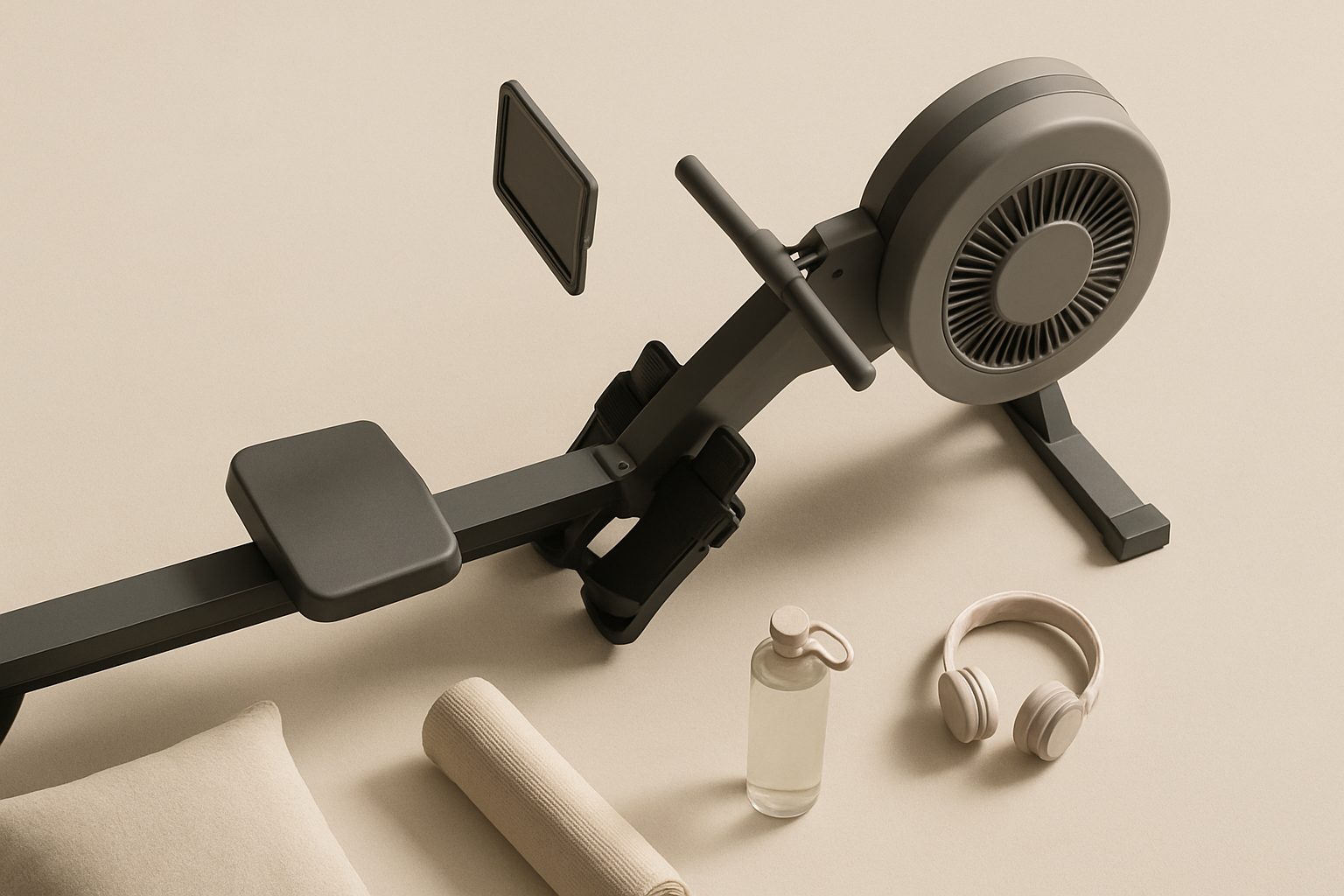
Air machines use a fan wheel that creates resistance proportional to how hard and fast you pull. The harder and faster you row, the more the fan spins, and the more resistance builds. This creates a naturally escalating challenge throughout the stroke.
Feel and performance: Air rowing feels responsive and dynamic. The resistance ramps up as you accelerate, which mimics outdoor rowing on water more closely than other machines. This makes the stroke feel more "alive" and engaging. You must pull strongly to build momentum, which builds fitness effectively. The flywheel's momentum can carry you through a weaker second half of the stroke, though, which is worth being aware of.
Noise: The fan creates noticeable sound—a gentle whooshing that increases with intensity. Not disruptive during morning workouts, but louder than magnetic machines. If you row frequently or live in a shared space, this matters.
Maintenance: Moderate. The fan wheel and chain occasionally need lubrication. Dust accumulates inside the fan cover over time and should be vacuumed out every few months to keep cooling effective. It's straightforward, but more involved than magnetic.
Price range: £400–£1,200. Often pricier than magnetic at the budget end, but available at serious quality levels.
Durability: Excellent. Air machines are built tough and tolerate aggressive training. The Concept2 is an industry standard for good reason—these machines routinely last a decade or more with basic care.
Water Rowing Machines
Water machines use a paddle submerged in a tank to create resistance. The harder you pull, the more the water resists. The resistance also varies naturally as water sloshes and adjusts inside the tank.
Feel and performance: Water rowing offers the closest feel to outdoor rowing. The resistance builds smoothly but with organic variability—each stroke feels slightly different because water doesn't behave mechanically. This responsiveness is deeply satisfying for rowers. The aesthetic appeal matters too; water machines are visually striking, which some find motivating.
Noise: Moderate. You'll hear water sloshing, splashing, and the frame creaking under load. Quieter than air machines, but louder than magnetic. The sound is usually pleasant rather than annoying—many users find it immersive.
Maintenance: Most demanding. Water must be kept clean and balanced with a small amount of treatment fluid (usually just a biocide to prevent algae and bacteria). You monitor water colour regularly. If you neglect this, the water becomes cloudy or discoloured, which isn't harmful but looks poor. It's not difficult, but it's a recurring task.
Price range: £800–£2,500. Significantly more expensive than other types, reflecting the engineering complexity and appeal of premium brands like Waterrower.
Durability: Very good, but depends on water maintenance. A well-maintained machine lasts 10+ years. Neglected water can eventually damage seals or cause aesthetic degradation.
Quick Comparison Matrix
| Factor | Magnetic | Air | Water | |---|---|---|---| | Noise | Quietest | Moderate–loud | Moderate | | Resistance feel | Smooth, artificial | Dynamic, natural | Organic, engaging | | Ease of adjustment | Very easy (dial) | Fixed to effort | Fixed to effort | | Maintenance | Minimal | Moderate | High | | Price | £300–£700 | £400–£1,200 | £800–£2,500 | | Best for | Technique work, shared homes | High-intensity training, rowing purists | Premium experience, outdoor rower feel |
The Verdict
Choose magnetic if: You're budget-conscious, live in a flat or shared space, want nearly silent operation, or prioritise easy maintenance. These machines serve recreational users and technique-focused training well.
Choose air if: You want genuine rowing feel without water's maintenance demands, plan to row hard and frequently, or need proven durability. Air machines reward effort and suit any fitness level from beginner to competitive.
Choose water if: You're willing to invest more and value the authentic rowing experience above all else. Water machines suit committed rowers who appreciate the psychological engagement of the sport's real feel.
Most UK buyers find the air vs. magnetic decision most practical. Water is a premium lifestyle choice rather than a purely functional one. Start by honestly assessing your space constraints (noise tolerance), budget, and whether you'll truly row enough to justify higher price and maintenance.
More options
- Concept2 RowErg Indoor Rowing Machine (Amazon UK)
- WaterRower Natural Rowing Machine (Ash Wood) (Amazon UK)
- Bluefin Fitness Sprint 2.0 Magnetic Rowing Machine (Amazon UK)
- JLL R200 Home Rowing Machine (Amazon UK)
- Jorvik Tri-Mode Water Rowing Machine (Amazon UK)