How to Maintain a Rowing Machine at Home UK: Cleaning, Oiling & Servicing Tips
A rowing machine is an investment in your fitness, but like any piece of equipment, it needs regular maintenance to keep running smoothly and safely. Whether you've got a water rower, magnetic machine, or air resistance model, following a sensible maintenance routine will extend its lifespan, prevent costly repairs, and ensure consistent performance. Here's what you actually need to do.
Why maintenance matters
Most home rowing machines fail prematurely not because they're poorly built, but because owners don't maintain them. Dust accumulates in the flywheel, rails become dry and sticky, and water tanks develop algae. These issues don't just affect performance—they can create safety hazards or void warranties. A few minutes each week and a deeper service once or twice a year prevents almost all common problems.
Cleaning: the weekly routine
Wipe down the frame and rails after every few uses, especially if you're sweating heavily. Use a soft, dry microfibre cloth—nothing abrasive that'll scratch the finish. If rails look grimy, a barely damp cloth works, but never spray water directly onto the machine.
For water rowers, drain the tank and replace it with fresh water every 4–6 weeks if your local water is particularly hard. Hard water leaves mineral deposits that reduce smoothness and can eventually clog the flywheel paddles. If you notice cloudy water or discolouration, it's definitely time to empty and refill.
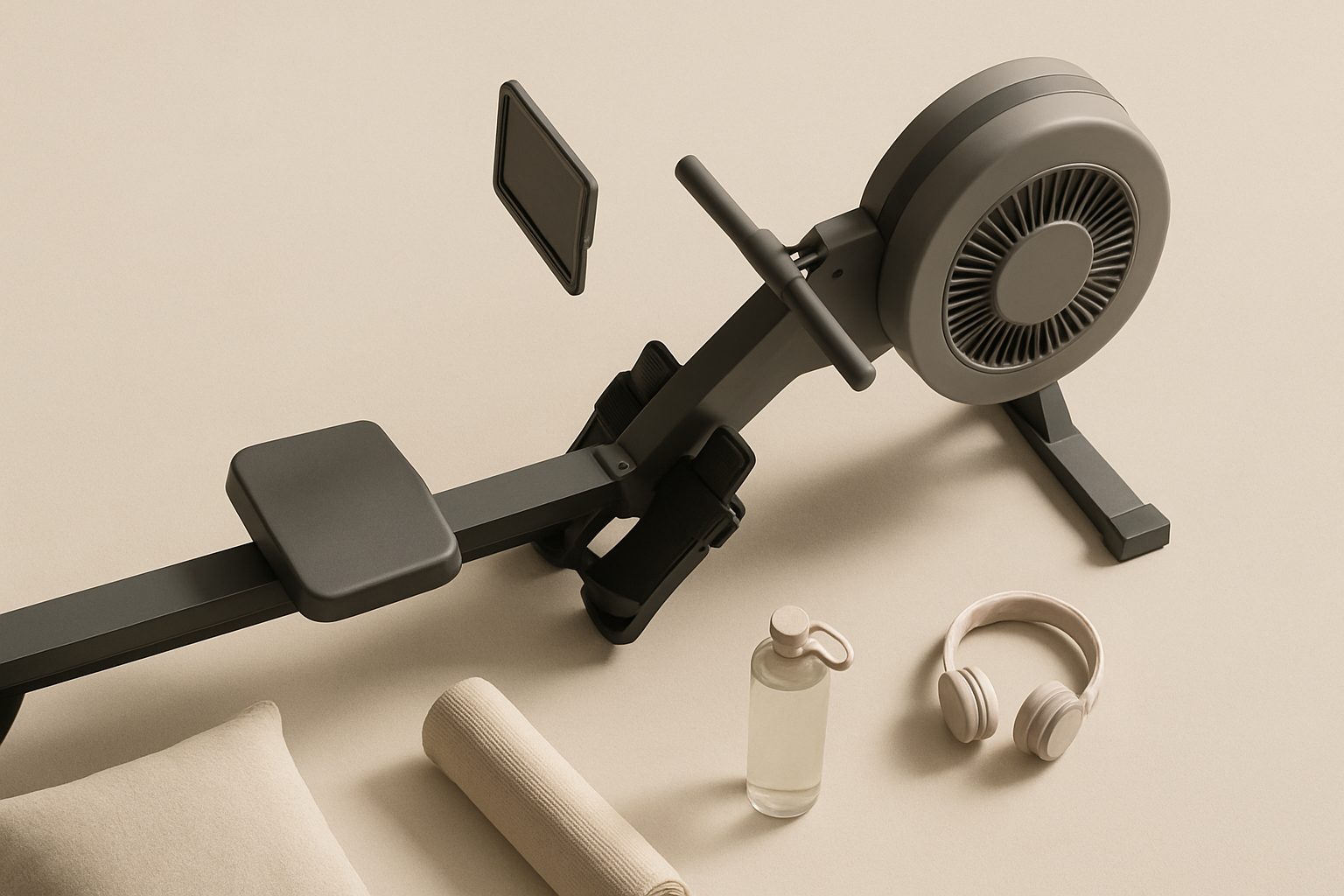
Air rowers accumulate dust around the flywheel cage. Vacuum carefully with a brush attachment, or use a cloth to wipe between the fan blades—don't use water here. Hydraulic rowers need little beyond a wipe-down of the pistons if they look dusty.
Water tank algae: prevention and treatment
If your water rower's tank sits unused for a week or two, algae can begin to form, especially in warmer months. This isn't harmful to you, but it makes the water look unpleasant and can affect the smooth feel of your rowing. The simplest solution is regular water changes.
For persistent algae, Clorox (or any household bleach-based algae tablet) works effectively. Add one tablet to the tank, leave it for a few hours, empty it completely, then refill with fresh water. Don't keep the bleach in permanently—use it only as a treatment, then maintain with regular water changes. Some users swear by ultraviolet (UV) float systems designed for water tank purification, though these are pricier and not strictly necessary if you change water regularly.
Rails and slide mechanics: oiling and friction
The seat slides along rails, and keeping these smooth is crucial. Every 2–4 weeks, run a thin cloth lightly oiled with silicone-based spray (like WD-40) along the rails. Do this sparingly—you want a light coating, not a puddle. Too much oil attracts dust and becomes sticky. Wipe any excess off with a clean cloth.
For magnetic rowers, the magnetic brake is sealed and needs no oiling, but the seat rails follow the same rule. Air and water rowers have exposed rails that need attention; check them each time you use the machine and give them a monthly proper clean.
Never use heavy machinery oil or grease. It's too thick, gums up quickly, and traps dust. Silicone spray or the light machine oil that comes with premium machines is the right choice.
Chain rowers: specific care
If you have a chain-driven rower (common on water machines and some premium air models), the chain needs occasional attention. Wipe it down with a dry cloth weekly—chain rust is rare in a dry home but possible in damp conditions. Once every 2–3 months, apply a proper chain lubricant designed for fitness equipment or bicycles. Again, light application: spin the flywheel to distribute the lubricant, then wipe off excess.
A rusty or stiff chain doesn't just feel bad—it can cause the chain to slip or the rower to jam entirely.
Checking fasteners and the frame
Every month, run through the rower and tighten any loose bolts with the appropriate hex key or spanner. Use your hands to gently rock the seat forward and back, and listen for creaks. If something sounds loose, find the source and tighten it. Handle bolts are particular culprits; repeated gripping can loosen them over time.
Check the frame for visible cracks or damage. Minor surface cracks in the finish aren't an issue, but actual structural cracks (especially on water rowers with wooden frames) should be addressed quickly or the machine will eventually fail catastrophically.
Annual servicing and when to go professional
Once a year, or if the rower starts to feel sluggish or noisy despite regular maintenance, consider a deeper service. For water rowers, this means draining the tank completely, wiping it inside, refilling with distilled water, and checking the seals for leaks. For magnetic and air machines, it's worth cleaning the flywheel thoroughly and checking resistance sensors (if present) for dust.
If you've got a Concept2 (the gold standard for home rowing) or another premium brand, the manufacturer usually publishes maintenance guidance specific to your model. Follow it. Some machines have sealed bearings that shouldn't be oiled; trying to "help" by oiling a sealed bearing can cause more harm than good.
For anything beyond these steps—replacing seals, repairing cracks, or fixing electronic displays—contact the manufacturer or a specialist fitness equipment technician. Trying to bodge repairs often voids warranties and can be unsafe.
Storage and environment
Store your rower indoors in a dry, temperature-stable space. Basements are common but risky if they're damp; moisture will rust metal parts and warp wooden frames on water rowers. A bedroom or spare room is ideal. If space is tight, vertical storage (if your model supports it) is fine, but make sure the machine is stable and won't topple.
Final thoughts
Good maintenance isn't complicated: keep it clean, keep the rails smooth, check it's tight, and change the water if you've got a water rower. Ten minutes a month prevents most problems. Your rower will repay the effort by staying reliable, feeling smooth, and lasting years longer than a neglected one.
More options
- Concept2 RowErg Indoor Rowing Machine (Amazon UK)
- WaterRower Natural Rowing Machine (Ash Wood) (Amazon UK)
- Bluefin Fitness Sprint 2.0 Magnetic Rowing Machine (Amazon UK)
- JLL R200 Home Rowing Machine (Amazon UK)
- Jorvik Tri-Mode Water Rowing Machine (Amazon UK)