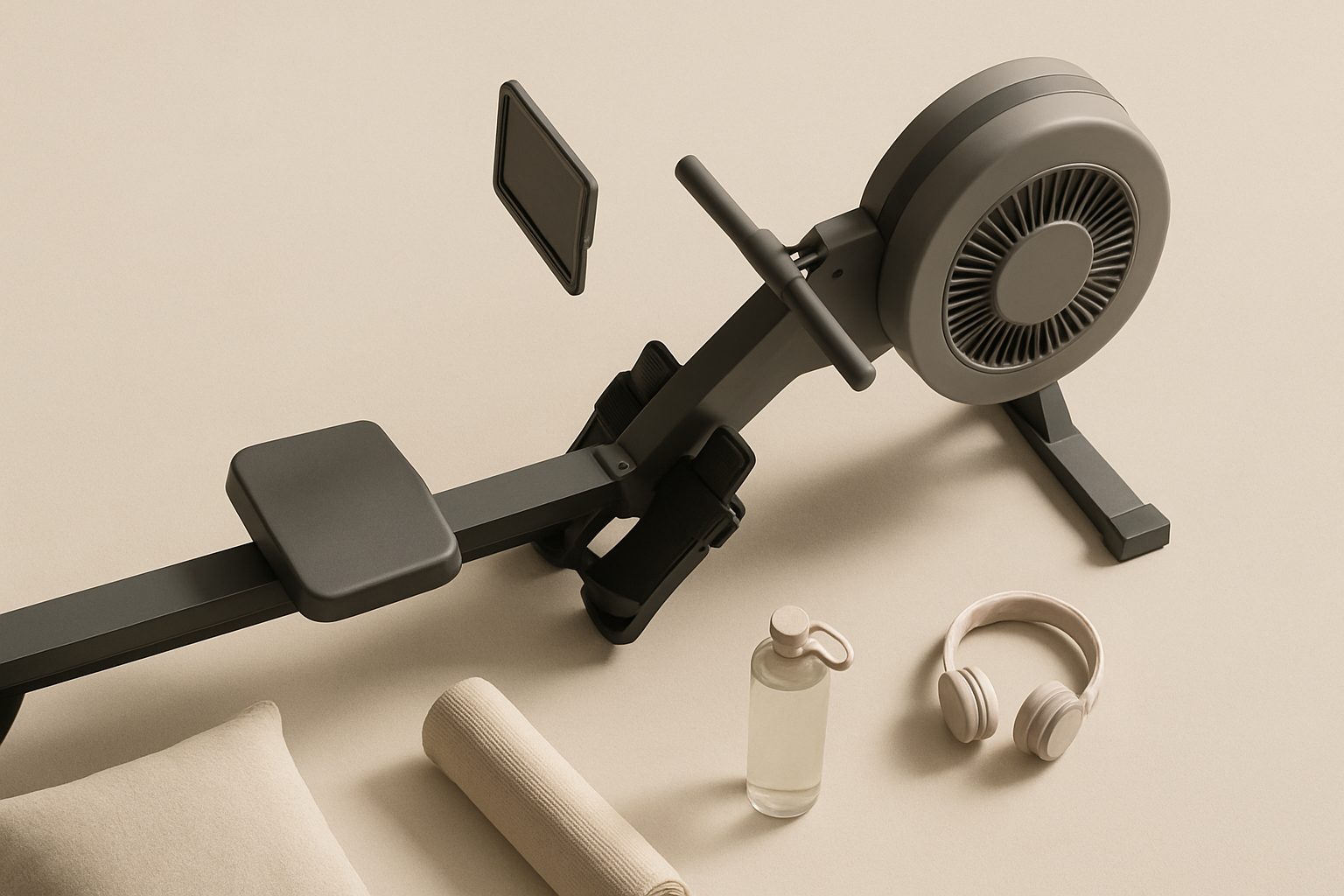
How Many Calories Does a Rowing Machine Burn Per Hour? UK Guide
The number of calories you'll burn on a rowing machine depends on three main factors: your body weight, exercise intensity, and how long you row. A lightweight person rowing at a gentle pace burns far fewer calories than a heavier person pushing hard, so there's no single answer—but we can give you precise figures based on scientific data.
How Calorie Burn Is Calculated
Exercise scientists use a measure called MET (Metabolic Equivalent of Task) to quantify how hard your body works during different activities. One MET equals the energy you use sitting still. Rowing at different intensities has different MET values:
- Light rowing (leisurely pace): 3.5 MET
- Moderate rowing (steady effort): 6 MET
- Vigorous rowing (hard, racing pace): 8.5 MET
To calculate calories burned, use this formula: Calories = MET value × body weight in kg × hours
For example, a 80 kg person rowing moderately (6 MET) for one hour burns: 6 × 80 × 1 = 480 calories.
Calorie Burn by Weight and Intensity
Here's what you can realistically expect per hour:
Light Rowing (3.5 MET)
- 60 kg person: 210 calories
- 75 kg person: 263 calories
- 90 kg person: 315 calories
Moderate Rowing (6 MET)
- 60 kg person: 360 calories
- 75 kg person: 450 calories
- 90 kg person: 540 calories
Vigorous Rowing (8.5 MET)
- 60 kg person: 510 calories
- 75 kg person: 638 calories
- 90 kg person: 765 calories
Most people sustain moderate intensity for extended sessions. Vigorous rowing is challenging and typically only holds for 20–40 minutes before effort drops.
Rowing vs Other Cardio
How does rowing stack up? Here's what a 75 kg person burns per hour:
| Activity | Intensity | Calories/Hour | |----------|-----------|---------------| | Rowing | Moderate | 450 | | Rowing | Vigorous | 638 | | Cycling | Moderate (12–16 km/h) | 360 | | Cycling | Vigorous (19–24 km/h) | 600 | | Treadmill running | Easy jog (8 km/h) | 450 | | Treadmill running | Hard run (13 km/h) | 900 | | Brisk walking | 5 km/h | 225 |
Rowing sits comfortably in the middle of the cardio spectrum. It typically burns more than cycling at the same perceived effort, but less than running—though running is higher impact, which matters for joint health.
The rowing machine's real advantage isn't peak calorie burn; it's that you can sustain it comfortably while engaging 85% of your muscle mass. You're working your legs, core, back, and arms simultaneously, which keeps your metabolism elevated even after you stop.
Real-World Factors That Change the Numbers
Your actual burn won't match these tables exactly. Several things shift the result:
Machine type matters. Air rowers (like Concept2) require more power at higher strokes-per-minute, so you burn more calories at the same heart rate than on water or magnetic rowers. Damper settings also affect this.
Fitness level. Trained rowers burn fewer calories at the same pace because they're more efficient. Your body adapts—what felt vigorous in week two might feel moderate in month three.
Technique. Poor form wastes energy but doesn't necessarily increase calorie burn—you're just tiring faster. Good technique lets you sustain intensity longer, which compounds the total burn.
Age and metabolism. Older adults burn slightly fewer calories than younger people at identical effort, and men typically burn more than women at the same weight due to muscle mass differences.
Rowing pace and resistance. A common misconception is that pulling harder always burns more calories. In reality, calorie burn on a rowing machine is primarily driven by total work output over time. A 30-minute session at moderate intensity (say, 24 strokes per minute) often beats a 20-minute blast because you're working longer.
Practical Takeaway
If weight loss is your goal, don't chase the highest calorie-per-hour number. Instead, focus on:
- Consistency. A 45-minute moderate-intensity session three times weekly beats sporadic hour-long efforts. You'll stick with it.
- Increasing duration gradually. New rowers should aim for 20–30 minutes at a sustainable pace before pushing harder or going longer.
- Mixing intensities. One session at vigorous intensity weekly, with moderate steady-state work on other days, builds fitness and prevents boredom.
A 75 kg person doing three 45-minute moderate sessions weekly burns roughly 608 calories from rowing alone. Add basic dietary awareness, and weight change becomes inevitable.
Next Steps
Calorie burn is only one part of choosing the right rower. Machine quality, comfort, and whether you'll actually use it matter equally. If you're serious about weight loss through rowing, read our guide to the best rowing machines for weight loss to find an option that fits your home, budget, and long-term commitment.
More options
- Concept2 RowErg Indoor Rowing Machine (Amazon UK)
- WaterRower Natural Rowing Machine (Ash Wood) (Amazon UK)
- Bluefin Fitness Sprint 2.0 Magnetic Rowing Machine (Amazon UK)
- JLL R200 Home Rowing Machine (Amazon UK)
- Jorvik Tri-Mode Water Rowing Machine (Amazon UK)