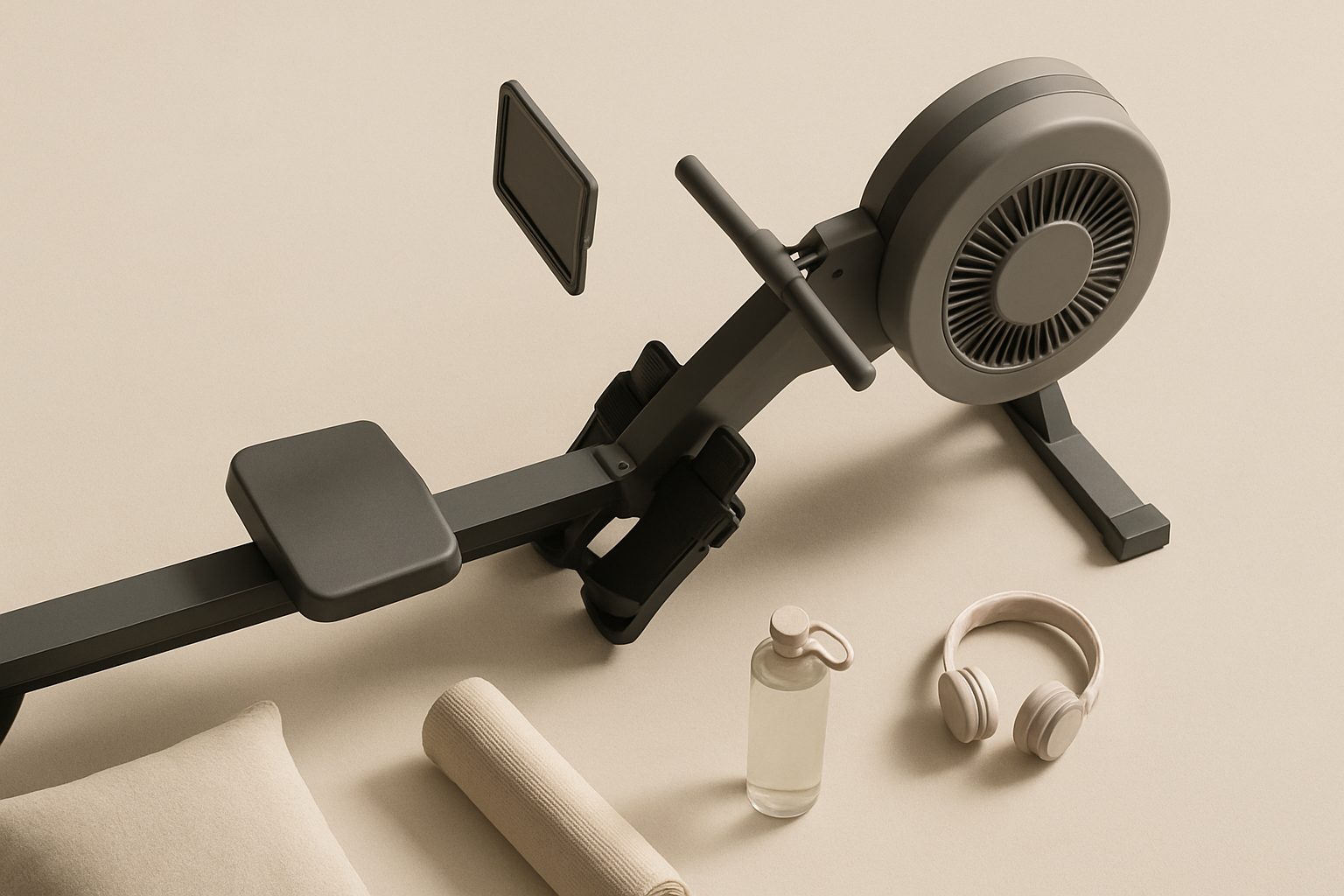
Best Rowing Machines for Small Flats & Apartments UK 2025
Finding space for fitness equipment in a UK flat is genuinely tricky. Most people assume rowing machines need a dedicated gym—but that's not the reality. A decent rowing machine takes up roughly the same footprint as a single bed when in use, and many models fold or store vertically, making them far more practical than a treadmill or exercise bike for tight living situations. The challenge isn't whether they fit; it's choosing one that won't rattle your neighbours, won't dominate your lounge, and will actually get used.
Why Rowing Works in Small Spaces
Rowing machines are deceptively efficient for compact living. You're working 80% of your body in a vertical-ish position without needing knee space or lateral movement. Most models are roughly 2.2 metres long and 0.6 metres wide—that's about the footprint of a standard sofa. More importantly, many fold or stand upright, cutting the usable space in half when you're done.
They're also quieter than treadmills. Magnetic rowing machines are nearly silent; even water rowers (louder) generate a gentle whoosh rather than pounding impacts that travel through floorboards. For flat living, especially upstairs, this matters.
Key Dimensions to Check
Before looking at specific models, measure your space honestly. Length-wise, you need roughly 2.3 metres of unobstructed space to accommodate someone of average height during the drive phase. If you're planning to store it folded, check the folded dimensions against your cupboard space or the gap behind a door.
Width varies less—most machines are 0.55 to 0.65 metres—but if your hallway or bedroom is particularly narrow, it's worth checking. Weight is another practical consideration. Machines weighing under 30 kg are genuinely portable; anything over 50 kg will stay where you put it, which is useful for stability but less helpful if you need to move it for floor space.
Also check the footprint of the flywheel housing. Some machines have a narrower profile during use, which helps if your flat has awkward furniture placement.
Foldable Models: Real-World Trade-Offs
Foldable rowing machines are genuinely popular in UK flats, but they're not a magic solution. When folded, they do take up considerably less space—often standing vertically at 1.2 to 1.5 metres tall. The catch: folding mechanisms add complexity, weight distribution feels slightly different, and some cheaper models develop a slight wobble over time.
The better foldable models (using magnetic or water resistance) remain stable because of their weight distribution. The cheaper air-resistance folders sometimes feel less solid mid-row. If you're serious about using it regularly, the extra stability of a non-folding model might matter more than the occasional space-saving benefit of folding. That said, for genuinely tight London or Edinburgh flats, a foldable option can be the difference between fitting one in or not. For more on this, see our detailed guide to foldable rowing machines.
Magnetic vs. Other Resistance Types
Magnetic machines are the sweet spot for flats. They're silent, smooth, and require minimal maintenance. The resistance is adjustable (usually 8 to 16 levels), so you can row gently early morning without waking anyone, or push hard in the evening. They're typically £300 to £600 and last years without issues.
Water rowers are beautiful and incredibly satisfying to use—the sound is genuinely lovely—but they're bulkier, heavier, and more expensive (£800-plus). They're quieter than air machines but noisier than magnetic ones. They also require occasional maintenance and periodic water treatments.
Air-resistance rowers (the damper-fan type) are the loudest and least suitable for flats. They're effective but sound like an angry hairdryer, which matters when you're flat-sharing or living in a converted Victorian house with neighbours directly below.
Storage Solutions Beyond Folding
Not every space works with a folded machine. Some flats have awkwardly-placed radiators, low ceilings, or no cupboards. For those situations, look for machines that stand vertically on a compact base. Some newer models sit upright with a footprint of 1 metre by 0.6 metres—not much bigger than a umbrella stand. These don't save dramatic amounts of space but make the machine less obstructive in a room.
Wall space is also an option. A few machines can be mounted on a wall bracket, though this is rarer and typically for higher-end models.
Noise and Neighbour Relations
Even quiet machines aren't silent if your floors are thin. The real quietness comes from your form—sloppy, jerky rowing makes any machine sound worse. On a magnetic rower with decent form, downstairs neighbours won't hear a thing. On an air machine, they will.
If you're upstairs, consider a rubber mat underneath (dampens vibration) and aim for magnetic resistance. If you're ground floor or in a house, any modern machine will be fine.
What Actually Matters for Flats
Avoid machines under £250. They wobble, squeak, and develop hydraulic fluid leaks. Avoid air-resistance machines unless you have serious sound insulation. Check folded dimensions if storage matters to you. Pick magnetic resistance unless you really want the water-rower experience. Make sure you have at least 2.3 metres of usable length, though many people row successfully in tighter spaces by angling slightly.
The best machine for a flat is one you'll actually use. A compact, quiet, well-built machine you row three times a week is better than a fancy folding model that lives gathering dust behind your sofa.
More options
- Concept2 RowErg Indoor Rowing Machine (Amazon UK)
- WaterRower Natural Rowing Machine (Ash Wood) (Amazon UK)
- Bluefin Fitness Sprint 2.0 Magnetic Rowing Machine (Amazon UK)
- JLL R200 Home Rowing Machine (Amazon UK)
- Jorvik Tri-Mode Water Rowing Machine (Amazon UK)