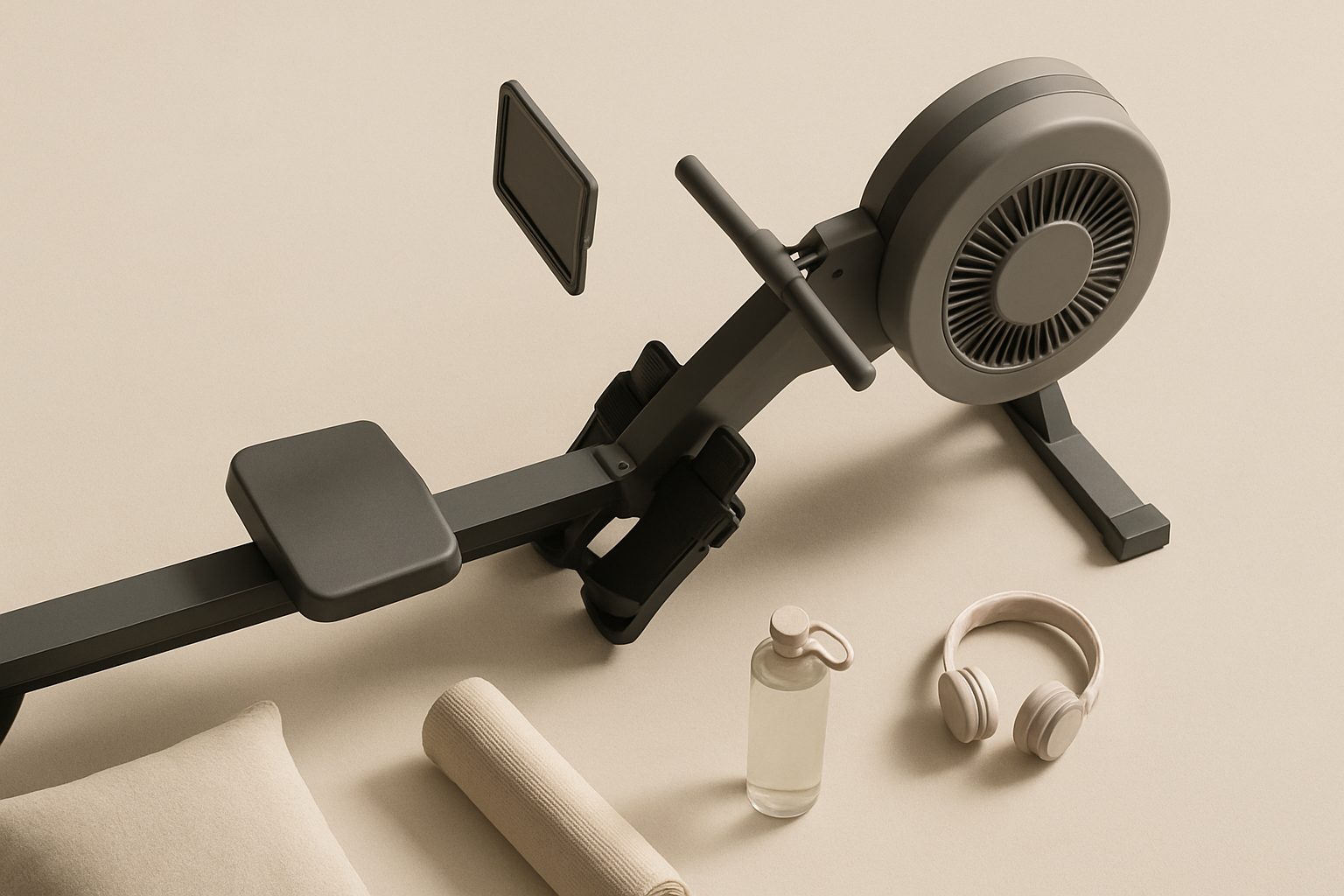
Best Heavy-Duty Rowing Machines UK 2025: Top Picks for Users Up to 150 kg+
Rowing machines marketed for heavier users aren't simply oversized versions of standard models—they require reinforced frames, higher-gauge seat rails, sturdier footrests, and extended warranties that reflect the mechanical stress involved. If you're over 130 kg, a standard machine rated to 100 kg will degrade quickly, develop creaks in the frame, and eventually become unsafe. This guide focuses on machines genuinely built for durability at higher weights.
What Makes a Rowing Machine "Heavy-Duty"?
The phrase "heavy-duty" is overused in fitness retail, but specific features actually matter for heavier users.
Frame construction is primary. Cast-iron rail systems or commercial-grade aluminium with internal bracing resist the repeated compression and twist forces that come with a heavier body. Lightweight welded steel frames flex over time, creating play in the seat and eventually fracture points near stress joints.
Seat rail gauge determines how much flex you'll experience. A 16 mm or thicker rail holds its tolerance better than 12 mm variants. You'll notice this immediately—a thicker rail feels planted and responsive, while thinner rails allow the seat to wobble side-to-side, which is uncomfortable and accelerates wear.
Footrest design matters too. Machines designed for heavier users have deeper foot cups, wider straps, and often a second strap position. Undersized footrests mean your foot leverage isn't optimised, and they're more prone to cracking under the force of a harder drive phase.
Warranty coverage on the frame is a proxy for manufacturer confidence. Standard warranties are 2–5 years; heavy-duty models often include 7–10 years on the frame specifically.
Key Considerations for Heavier Users
Damping system durability. Air dampers (fan-based) are more robust than magnetic systems when you're generating higher power output. Fan dampers self-regulate and rarely fail, though they do require regular cleaning. Magnetic dampers are quieter but less forgiving if adjustment mechanisms wear loose.
Seat comfort over longer intervals. A wider, better-padded seat becomes genuinely important if you're doing 20+ minute sessions. Narrower seats can create pressure points that make training uncomfortable. Look for seats with dense foam and a curve that supports your sitting position.
Resistance consistency. Heavier users produce more variable resistance forces during the stroke. Machines with independent damper adjustment (separate from resistance level) let you tune feel more precisely than fixed-ratio systems.
Floor space and stability. Heavy-duty models are often slightly longer and wider. Check the dimensions—they typically occupy 2 metres by 0.8 metres, though some commercial variants are larger. A machine should not shift when you're driving hard off the footrest; quality anti-slip feet matter more than it sounds.
Common Issues with Under-Rated Machines
Using a standard rowing machine at higher weights typically produces creaks within 3–6 months of regular use. The seat rail develops side-to-side play, the damper mechanism loosens, and weld points near the frame legs can fatigue. Repairs are often uneconomical—parts aren't available, and welding aluminium frames isn't straightforward.
Some retailers market machines as suitable for 120–130 kg but haven't tested them beyond light-to-moderate use. Real-world feedback suggests 15–20 kg reduction from claimed specs is a reasonable buffer. A machine rated 140 kg handles regular use by someone at 120 kg; the same machine used daily by someone at 135 kg experiences noticeably faster wear.
What to Check Before Buying
Visit a showroom if possible. Sit on the machine, set the damper to level 8 or 9, and take a hard 10-stroke burst. Feel for:
- Seat movement. Does it track straight, or does it shift sideways under load?
- Frame flex. Is there any perceptible bend in the central rail or footrest assembly?
- Damper response. Does the resistance feel consistent, or does it lag when you accelerate the drive phase?
- Footrest security. Can you move the foot cups by hand, or are they solid?
Ask about the warranty explicitly—where is it limited (usually the magnetic damper, which wears) and where is it comprehensive (the frame). A frame warranty of less than 5 years on a heavy-duty machine is a weak signal.
Build Quality vs. Price
You'll pay more for heavy-duty models—typically £800–£2,500 against £300–£600 for standard machines. That difference is real construction: thicker materials, better fastening systems, and a frame that won't start compromising after a year of regular training.
Budget models at the lower end sometimes claim heavy-duty specs but cut costs on the damper mechanism or use thinner welds hidden inside the frame. Mid-range models (£1,200–£1,800) offer the best value for home use—they have the durable frame you need without paying for commercial-grade features like separate incline or split-belt designs.
Maintaining Heavy-Duty Machines
Despite better construction, durability depends on care. Clean the damper fan monthly (dust buildup increases friction), check fasteners quarterly, and dry the machine after sweaty sessions. Heavy-duty machines are more forgiving of neglect than standard models, but they're not maintenance-free.
If you're consistently over 130 kg and training regularly, a heavy-duty machine isn't optional—it's the economical choice. A durable machine lasts 5–7 years with proper care; a standard machine under-rated for your weight might fail within 18 months and won't resell well. The upfront cost difference pays for itself in longevity and reliability.
More options
- Concept2 RowErg Indoor Rowing Machine (Amazon UK)
- WaterRower Natural Rowing Machine (Ash Wood) (Amazon UK)
- Bluefin Fitness Sprint 2.0 Magnetic Rowing Machine (Amazon UK)
- JLL R200 Home Rowing Machine (Amazon UK)
- Jorvik Tri-Mode Water Rowing Machine (Amazon UK)